

What is a smiley piercing?
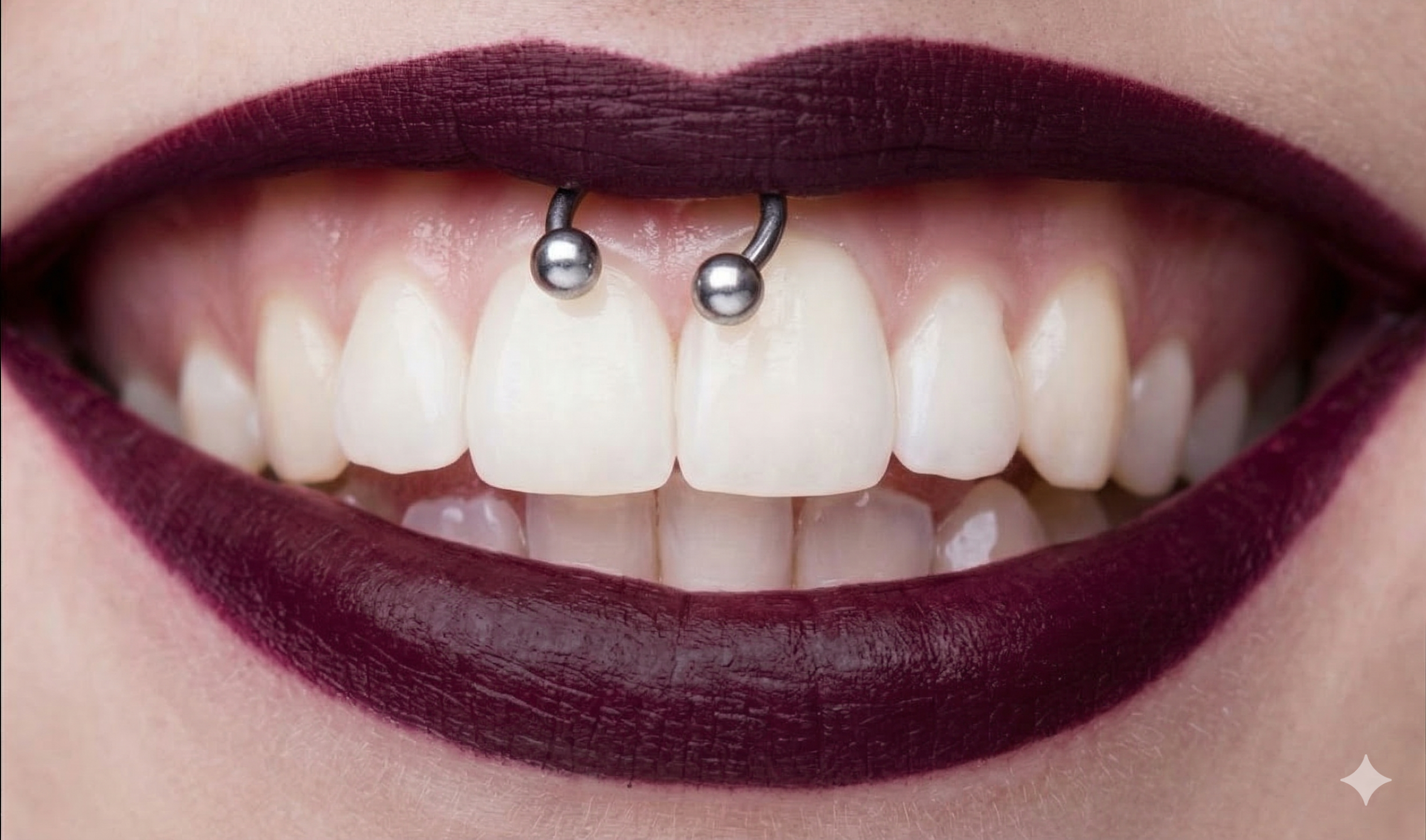
A smiley piercing passes through the frenulum—the thin flap of tissue connecting the inside of your upper lip to your upper gum line. Unlike traditional lip piercings, this placement is entirely internal, sitting flush against the palate when your mouth is closed. Because the tissue is delicate, the jewelry rests directly against your teeth and gums, creating specific risks for enamel erosion and gum recession that outweigh its discreet aesthetic.
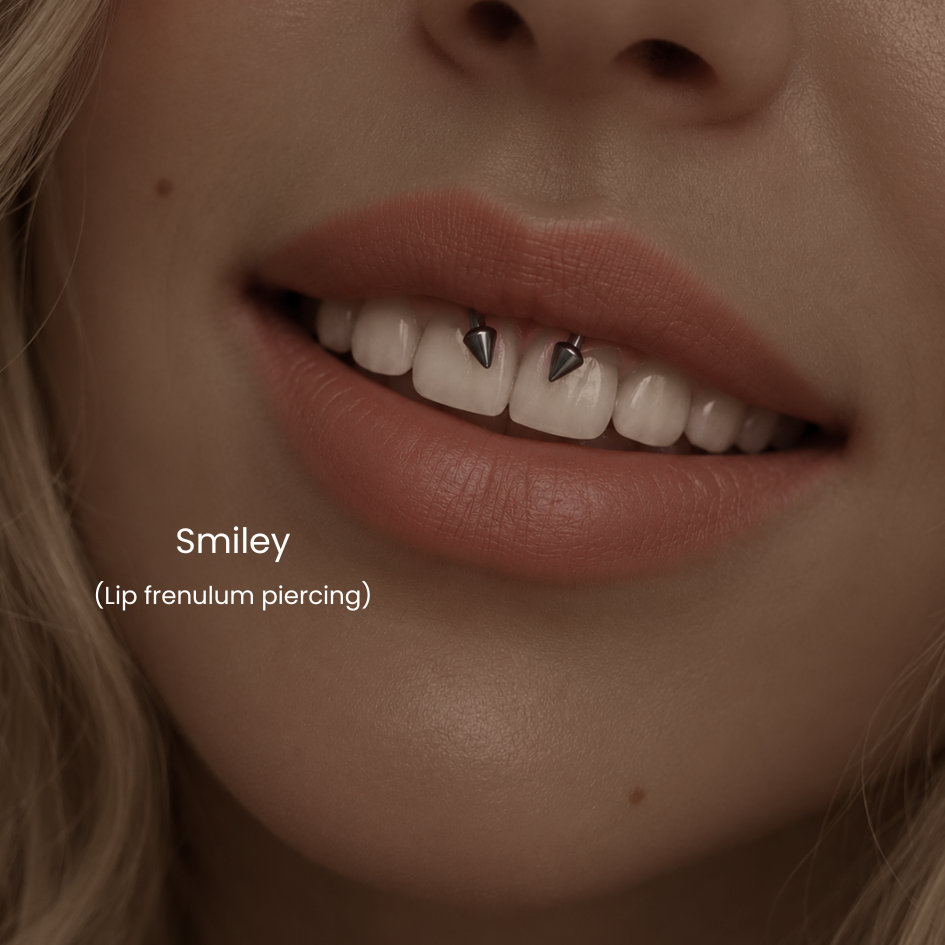
The frenulum is highly vascular and sensitive, making the piercing process more painful than expected despite the small gauge. The placement is precarious; if the jewelry is too heavy or placed incorrectly, there is a high risk of rejection, migration, or permanent dental damage. Safety must take precedence over aesthetics. Consult an experienced piercer to assess if your frenulum tissue is thick and resilient enough to hold the piercing safely.
Find a qualified piercer
The smiley piercing sits in a high-movement zone, making professional expertise the single most important factor in your safety. Oral tissue is delicate, and improper placement can lead to permanent gum recession or cracked teeth. You need a specialist who understands this specific anatomy, not just a generalist.
Always choose an APP (Association of Professional Piercers) member. Oral piercings carry unique risks for gum recession and tooth damage if done incorrectly.
Observe hygiene practices closely. They must use a single-use, sterilized needle, never a piercing gun. Guns cause blunt-force trauma, increasing healing time and rejection risk. Ask to see their autoclave log and confirm they use implant-grade titanium or niobium for initial jewelry to minimize allergic reactions and tooth wear.
During the consultation, a qualified piercer will assess the "floating" nature of your labial frenulum. If your anatomy isn’t suitable—such as if the frenulum is too thick or attached too high—they should advise against it. A professional prioritizes your long-term health over profit. If they pressure you despite anatomical concerns, leave.
The smiley piercing procedure
The appointment typically lasts three to four minutes. Because the target tissue is thin and highly vascular, the process relies on precision and speed. Understanding the sequence helps reduce anxiety.
Your piercer will wash hands, put on fresh gloves, and clean the frenulum with an antiseptic solution to remove bacteria and saliva before the needle makes contact.
Using a sterile marking pen, the piercer identifies the exact spot. You may be asked to lift your lip to confirm placement. The goal is the center of the frenulum where tissue is thinnest, ensuring the jewelry sits correctly without excessive pressure on teeth or gums.
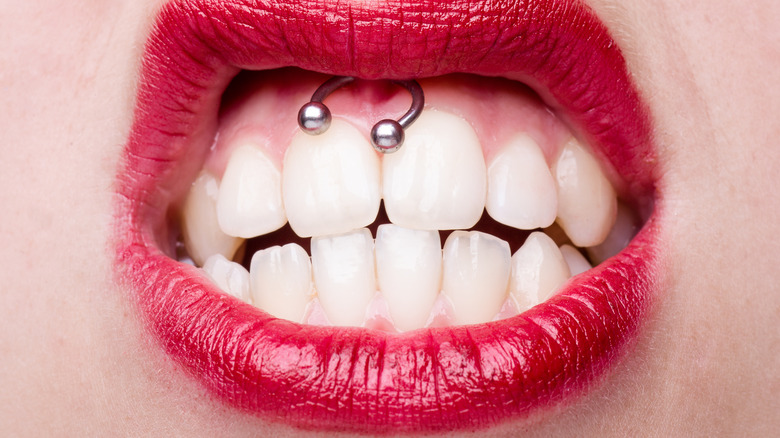
The piercer uses a hollow, sterile needle to create the hole. Unlike solid needles that push tissue aside, a hollow needle removes a tiny core of tissue for cleaner insertion. You will feel a quick pinch or pressure; pain is generally mild and brief due to the frenulum's nerve structure.
Once the needle is through, the piercer immediately inserts the initial jewelry, typically a curved barbell made of implant-grade titanium or steel. They secure the balls and check comfort before providing aftercare instructions.
The procedure avoids bone and cartilage, contributing to relatively quick healing compared to other oral piercings. However, speed does not negate the need for strict aftercare in this bacteria-rich environment.
Pain and healing timeline
Getting a smiley piercing involves navigating sharp, momentary pain and a sensitive healing process. Because the jewelry rests against teeth and gums, proper aftercare is critical for preventing long-term dental damage.
The Pain Experience
The actual piercing takes only a few seconds. Most describe a sharp pinch followed by a throbbing ache. Because the frenulum is highly vascular, initial discomfort can feel intense but typically subsides within hours, leaving mild soreness.
Initial Healing (6–8 Weeks)
The first phase focuses on closing the fistula. During this 6–8 week period, the area remains swollen and tender. Diligent saline rinses are essential. While the piercing may feel stable after a few weeks, internal tissue is still fragile. Avoid playing with the jewelry or pulling on the labret, as this can tear healing tissue and restart the clock.
Full Tissue Stabilization (Up to 3 Months)
Complete healing takes up to three months for the tissue to fully stabilize. During this entire period, avoid changing jewelry yourself. Switching pieces before full healing introduces bacteria and trauma, increasing infection and rejection risk.
Managing Discomfort
Stick to soft, cool foods and avoid spicy or acidic items that irritate the wound. Over-the-counter pain relievers like acetaminophen can help with initial throbbing. Contact your piercer or a healthcare provider immediately if you experience excessive swelling, persistent bleeding, or signs of infection like yellow discharge or fever.
Aftercare and cleaning routine
Healing requires strict hygiene because the oral cavity is filled with bacteria. The jewelry sits directly against gums and teeth, creating a high risk for irritation or infection.
Daily cleaning steps
Keep the frenulum clean without damaging healing tissue. Follow this sequence after every meal or drink other than water.
Food particles can get trapped around the jewelry. Rinse thoroughly with sterile saline solution or alcohol-free antimicrobial mouthwash. Swish gently for 30 seconds to flush debris without agitating the piercing.
Use a soft-bristled toothbrush. Be extremely careful not to snag the jewelry or brush directly against the piercing site. Adjust your angle to avoid pulling on the healing fistula.
Do not click the jewelry against your teeth or pull on it. This habit causes micro-tears in healing tissue and increases the risk of chipping teeth or damaging gums. Keep hands and tongue away from the area.
Risks to avoid
Certain habits delay healing or cause permanent damage. Avoid smoking and drinking alcohol during the initial healing phase, as these introduce irritants and dry out tissue. Avoid spicy or acidic foods that sting the open wound.
If you notice persistent redness, swelling, or discharge, consult your piercer or a healthcare provider. Oral piercings heal relatively quickly, but consistent care is essential to prevent complications.
Risks and jewelry options
A smiley piercing sits on the upper labial frenulum. Because this area is mobile and thin, the jewelry rests directly against your upper front teeth and gums. This proximity creates specific mechanical risks.
The primary concern is damage to enamel and gum tissue. Every time you speak, eat, or chew, the jewelry moves against your teeth. Over time, this friction can cause microscopic chips, enamel wear, or gum recession. These issues are often irreversible and can lead to costly dental repairs. Many piercers and dentists advise against this piercing specifically because of the high likelihood of long-term dental damage.
If you proceed, choosing the right jewelry is critical. A curved barbell made of implant-grade titanium or niobium is the standard choice. The curve allows the jewelry to sit comfortably against the frenulum without pressing aggressively into the teeth. Avoid straight barbells or rings initially, as they are more likely to snag and move excessively, increasing trauma risk.
Smiley Piercing Costs and FAQs
A smiley piercing typically costs between $40 and $80 at professional studios. This range usually includes initial jewelry, often a lightweight captive bead ring or circular barbell made of implant-grade titanium. High-end studios in major cities might charge up to $100. This fee covers expertise, sterilization protocols, and jewelry quality critical for healing in the sensitive oral environment.
How much does a smiley piercing hurt?
Most describe the pain as a quick, sharp pinch followed by a throbbing sensation. Because the frenulum is thin and sensitive, the initial puncture is noticeable but brief. Discomfort usually subsides within a few hours. The procedure is generally considered less painful than ear or nose piercings, though pain tolerance varies.
How long does it take to heal?
Healing typically ranges from 4 to 8 weeks, though full stabilization can take up to 3 months. Because the mouth contains bacteria, the risk of irritation is higher. Maintain strict oral hygiene, rinsing with saline or alcohol-free mouthwash after every meal. Avoid playing with the jewelry to prevent gum erosion or tooth damage.
Can I get a smiley piercing if I have a cold sore?
No. If you have an active cold sore (herpes simplex virus), wait until it has completely healed. Piercing through or near an active outbreak can spread the virus and delay healing. If prone to cold sores, discuss preventive medication with your doctor or piercer beforehand.
Is a smiley piercing visible when I smile?
Yes, by design. A smiley piercing is placed on the labial frenulum, which becomes visible when you smile or pull your lip down. It is often hidden when your mouth is closed, making it a "secret" piercing, but it will show during conversation. Consider your workplace and social circle before getting one.
No comments yet. Be the first to share your thoughts!