

Find a certified professional piercer
Your safety depends on the person holding the needle, not just the jewelry you choose. Before booking an appointment, verify that the piercer holds current certification and follows strict hygiene protocols. This step separates professional studios from amateur setups that risk infection or poor healing.
Look for membership in the Association of Professional Piercers (APP). This organization sets industry standards for sterilization, anatomy knowledge, and aftercare. You can verify a piercer’s status using their official locator tool, which lists members by physical location. Even if a piercer is not APP-certified, they must still hold a valid health department license issued by your local government.
Callout Always look for APP (Association of Professional Piercers) membership or state health department certification. These credentials ensure the piercer has undergone rigorous training in cross-contamination prevention and safe needle handling.
When you visit the studio, observe their hygiene practices directly. A professional piercer should use single-use, sterile needles for every client. They should wear fresh gloves and change them between clients. The jewelry should be in sealed, sterile packaging that is opened only in front of you. If the piercer uses a gun, leave immediately; guns are unsafe for most piercings and cannot be properly sterilized.
Ask questions about their sterilization process. They should use an autoclave, a device that uses high-pressure steam to kill bacteria and viruses. You can ask to see the autoclave indicator tape or spore test results, which prove the machine is functioning correctly. A confident, transparent answer indicates a studio that prioritizes your health.
Choose the right jewelry material
Your body meets the jewelry first, so the material dictates how fast and smoothly the hole heals. Implant-grade titanium and 14k+ gold are the only safe bets for fresh piercings. Anything less invites rejection, infection, and painful delays.
Jewelry acts as a foreign object in your tissue. If it leaches nickel or reacts with your sweat, your immune system attacks the site. This causes redness, swelling, and sometimes permanent scarring. Starting with hypoallergenic metals removes this variable, letting your body focus on closing the wound rather than fighting an allergic reaction.
The table below breaks down the most common options. Stick to the top two rows for initial piercings.
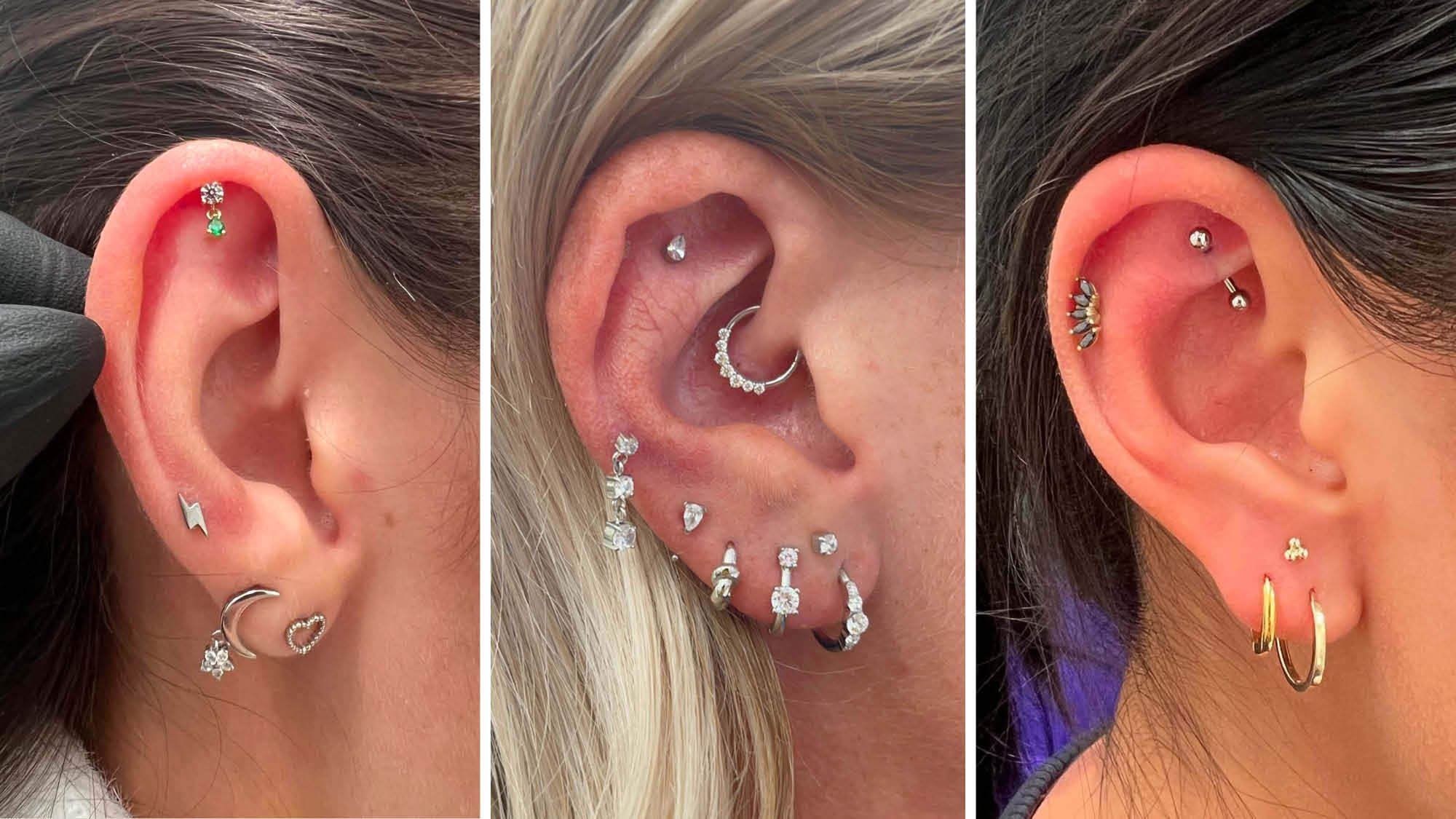
| Material | Biocompatibility | Cost | For New Piercings |
|---|---|---|---|
| Implant-Grade Titanium (ASTM F136) | Excellent | $$ | Highly Recommended |
| 14k+ Solid Gold | Excellent | $$$ | Highly Recommended |
| Surgical Steel (316L) | Moderate | $ | Not Recommended |
| Niobium | Good | $$ | Acceptable |
| Plastic/Acrylic | Poor | $ | Never |
Surgical steel sounds safe because of the name, but it often contains nickel. Niobium is a decent backup if you are allergic to both titanium and gold, but it is harder to find in starter studs. Plastic or acrylic jewelry traps bacteria and sheds microplastics into the fresh wound. Avoid it entirely.
Always verify the material before you get pierced. Reputable studios will provide a certificate of authenticity for their titanium or show you the hallmarks on gold. If they hesitate or offer "surgical steel" as the standard, walk away.
Prepare for your appointment
Getting ready for a piercing involves more than just picking a spot. Proper preparation minimizes discomfort, reduces the risk of fainting, and helps your body heal faster. Treat the appointment like a minor medical procedure: show up fed, hydrated, and ready.
Eat a solid meal
Never get pierced on an empty stomach. Low blood sugar combined with the stress of the needle can cause lightheadedness or fainting. Eat a balanced meal with protein and complex carbohydrates about two hours before your appointment. This keeps your energy stable and ensures your body is in the best state to handle the trauma.
Stay hydrated and skip alcohol
Drink plenty of water throughout the day leading up to your appointment. Well-hydrated skin is more pliable and easier to pierce cleanly. Avoid alcohol and recreational drugs for at least 24 hours prior. These substances thin your blood, which increases bleeding during the procedure and can interfere with the initial healing phase.
Bring identification and jewelry options
Most studios require a valid government-issued photo ID to verify your age, regardless of the piercing location. If you are purchasing jewelry at the studio, bring your budget in mind. If you are bringing your own jewelry (aftercare jewelry), ensure it is implant-grade titanium or gold and meets the studio’s size requirements. Check the studio’s policy on outside jewelry beforehand to avoid last-minute stress.
Wear comfortable, accessible clothing
Choose loose-fitting clothes that are easy to remove or adjust. For ear piercings, avoid turtlenecks or hoodies with tight hoods. For nipple or abdominal piercings, wear button-down shirts or tops that can be easily lifted or unfastened. You want to avoid stretching or pulling on your skin excessively once the jewelry is in place.
Follow pre-care instructions
If you are taking blood thinners like aspirin or ibuprofen, ask your piercer if you should pause them 24-48 hours before your appointment. Some studios also recommend avoiding caffeine, as it can make you jittery and increase bleeding. Follow any specific instructions provided by your chosen studio, as protocols can vary.
Double-check the studio’s hours and your scheduled time. Call ahead if you’re running late. Confirm whether they require a deposit or if they accept walk-ins. Arriving 5-10 minutes early gives you time to fill out consent forms without rushing.

Clean skin reduces the risk of infection. If you’re getting facial or ear piercings, wash your hair and face thoroughly before leaving home. Avoid applying heavy makeup, lotions, or perfumes to the area, as these can interfere with the sterilization process.
Anxiety is normal. Practice deep breathing exercises while waiting. Remember that professional piercers are used to nervous clients. A calm body reacts better to the needle, and a relaxed state helps your piercer work with precision.
Heal your septum, helix, or daith
Cartilage and septum piercings demand patience because the tissue has poor blood flow compared to soft earlobes. Treating your new piercing like a fragile plant—watering it gently and leaving it undisturbed—is the most reliable way to avoid infection and migration. The core principle is LITHA: Leave It The Hell Alone. This means resisting the urge to twist, turn, or play with the jewelry, which tears healing tissue and introduces bacteria from your hands.
Your daily care routine
- Clean with sterile saline twice daily. Use a pre-mixed sterile saline spray (0.9% sodium chloride) from a pharmacy. Spray the area directly, let it sit for thirty seconds to soften any crusties, then gently pat dry with a clean, disposable paper towel. Avoid cloth towels, which harbor bacteria and can snag on the jewelry.
- Rinse in the shower. Let warm water run over the piercing to naturally loosen debris. Do not use soap, hydrogen peroxide, or alcohol on the site; these dry out the skin and kill the healthy cells needed for healing.
- Leave the jewelry in place. Do not remove the initial jewelry, even if it looks swollen. Removing it too early can cause the hole to close over, trapping infection inside. If the jewelry feels too tight after a week, visit your piercer for a downsizing; do not attempt this yourself.
What to avoid during healing
- Sleeping on the piercing. Cartilage piercings like helixes and daiths are highly sensitive to pressure. Sleep on your back or use a travel pillow with a hole in the center to keep the ear floating. For septum piercings, avoid pressing your face into pillows.
- Submerging in water. Avoid swimming pools, hot tubs, lakes, and oceans until the piercing is fully healed. These bodies of water contain bacteria and chemicals that can cause severe irritation or infection.
- Touching or twisting. Never rotate or twist the jewelry. This myth causes micro-tears in the healing fistula. The only time you should touch the area is during your cleaning routine.
When to seek help
Some redness, mild swelling, and clear or whitish discharge (lymph) are normal for the first few weeks. However, if you experience throbbing pain, excessive heat, green or yellow pus, or if the swelling does not go down after two weeks, contact your piercer or a healthcare provider. These are signs of infection or rejection that require professional attention.
Spot signs of infection or rejection
Healing a new piercing involves a delicate balance between normal recovery and warning signs. Knowing the difference helps you decide when to wait it out and when to seek medical help. The most common confusion lies between lymph production and pus. Lymph is a clear or pale yellow fluid that dries into a crusty ring around the jewelry. This is a standard part of the healing process. Pus, however, is thick, opaque, and often green or dark yellow. It usually signals an active infection.
Redness and swelling are expected for the first few days, but they should gradually fade. If the area becomes hot to the touch, spreads beyond the immediate piercing site, or if you develop a fever, these are serious indicators. In these cases, do not remove the jewelry. Taking it out can trap the infection inside the tissue. Instead, contact a healthcare provider immediately for proper treatment.
Rejection is a different issue, often seen in surface piercings like eyebrows or navel rings. It occurs when the body treats the jewelry as a foreign object and pushes it toward the skin’s surface. Watch for the jewelry becoming more visible under the skin, the skin thinning between the entry and exit points, or the piercing channel widening. If you notice these changes, consult your piercer or a doctor to prevent scarring or migration.
No comments yet. Be the first to share your thoughts!