

Pick your piercing style
Choosing between a daith and a smiley piercing depends on your desired aesthetic and healing patience. The daith is a cartilage piercing in the innermost ear fold, while the smiley is a mucous membrane piercing through the upper lip frenulum.
The daith offers a hidden look that can be subtle or bold. It typically heals in six to twelve months and requires strict aftercare to prevent migration. The smiley is visible only when you smile or speak, making it playful. It heals faster, often in four to eight weeks, but carries a higher risk of gum or tooth damage if the jewelry is poorly fitted.
Consider your lifestyle and pain tolerance. Cartilage piercings like the daith are more painful initially and require diligent cleaning. Mucous membrane piercings like the smiley are less painful but demand careful oral hygiene and attention to jewelry length to avoid dental issues.
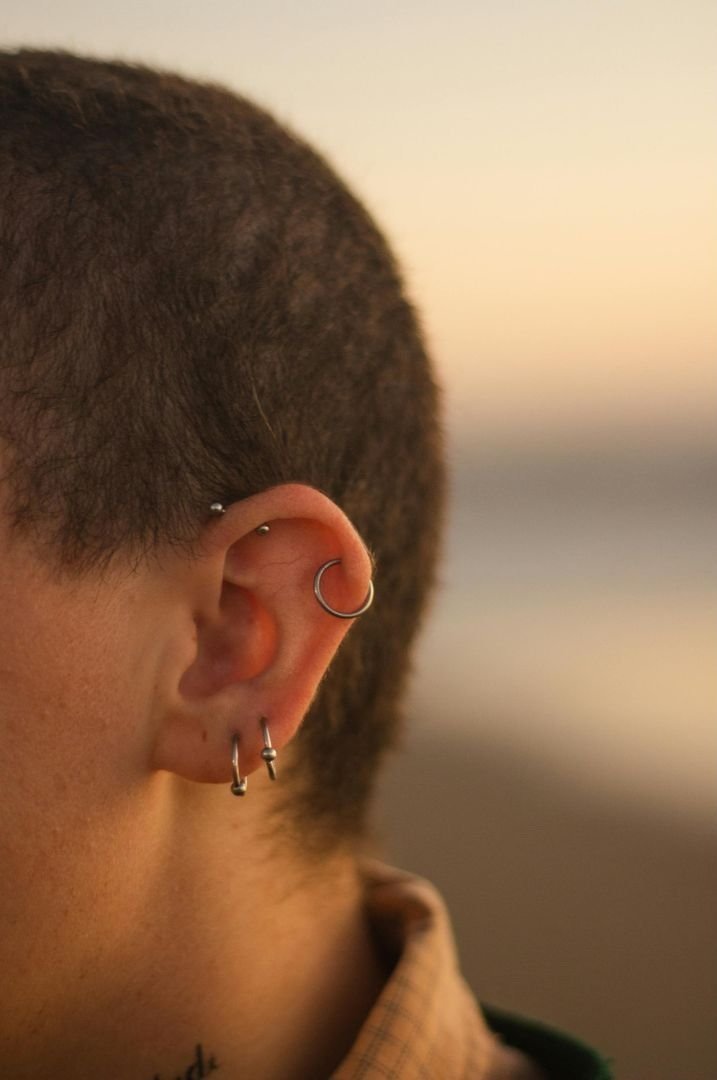
| Feature | Daith Piercing | Smiley Piercing |
|---|---|---|
| Location | Inner ear cartilage fold | Upper lip mucous membrane |
| Healing Time | 6–12 months | 4–8 weeks |
| Visibility | Hidden or subtle | Visible only when smiling |
| Jewelry Type | Curved barbells, rings | Short barbells, captive bead rings |
| Primary Risk | Migration, infection | Gum recession, tooth damage |
Find a professional piercer
Choosing the right studio is critical for daith and smiley piercings, as these require precision. A skilled piercer ensures the needle follows the correct angle, reducing rejection risk. Look for a studio specializing in body modification rather than a general tattoo shop.
Safety standards separate professionals from amateurs. Verify that the studio uses an autoclave for sterilization and single-use needles. You have the right to ask to see the autoclave indicator strip and sealed needle package before the procedure. Reputable piercers welcome these questions.
Jewelry material matters. For initial piercings, insist on implant-grade titanium or 14k+ gold. Avoid surgical steel or mystery metals, which can cause allergic reactions. A professional will have a catalog of high-quality jewelry ready for you.
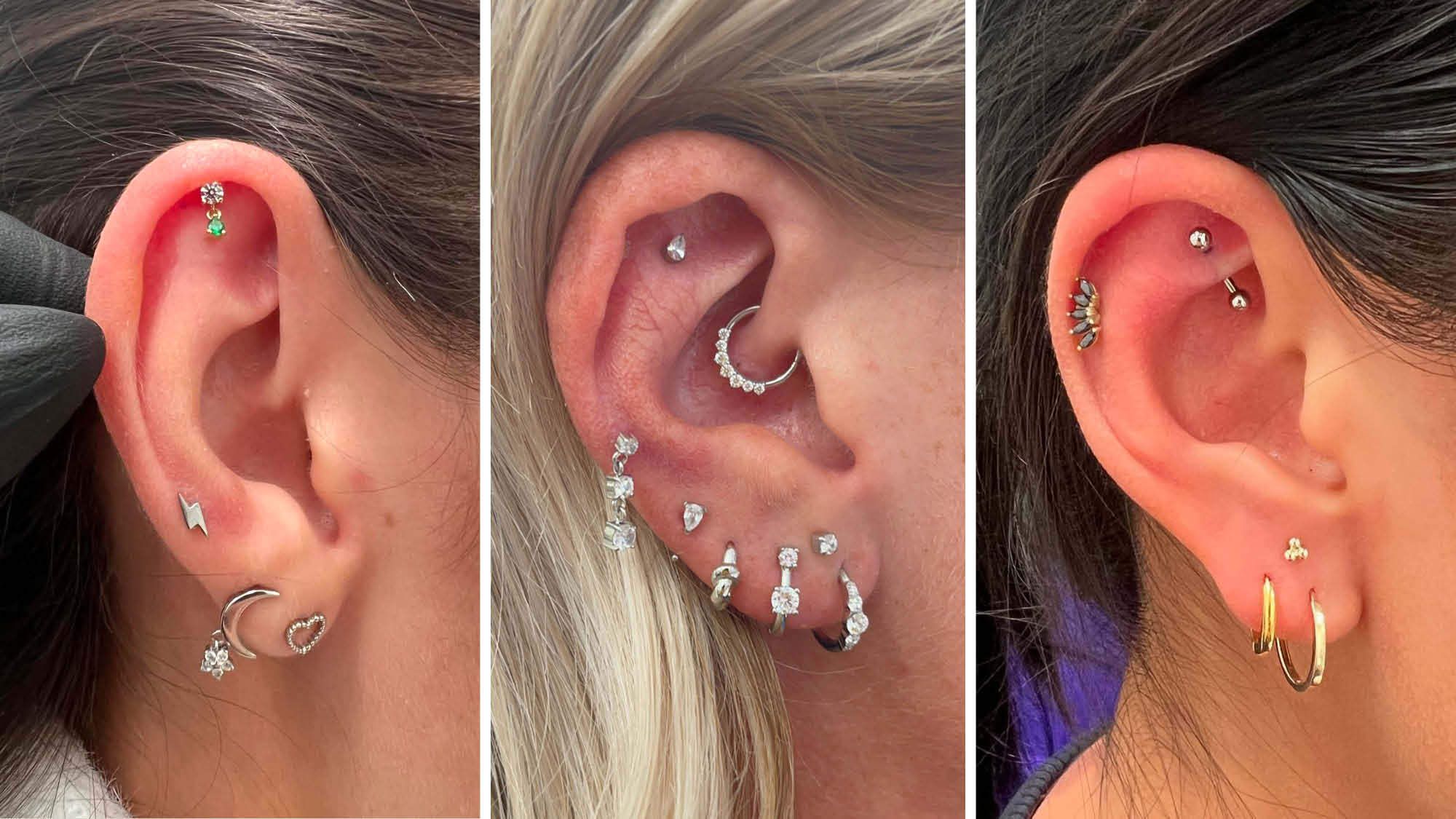
Review the piercer’s portfolio for healed daith and smiley examples. Good placement varies by anatomy. A skilled artist will assess your unique structure during a consultation to determine if you are a good candidate before proceeding.
What happens during the piercing
Understanding the process replaces anxiety with confidence. The procedure typically takes 15 to 30 minutes, designed to minimize discomfort while ensuring safety.
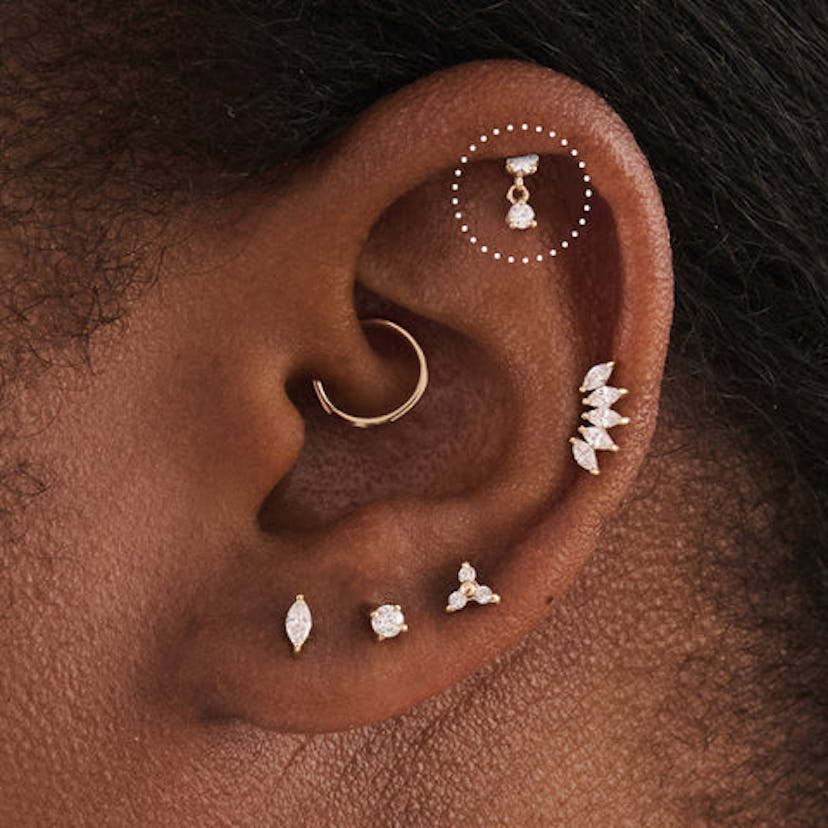
Your piercer cleans the area with medical-grade antiseptic. They use a sterile marking pen to pinpoint entry and exit points. For a daith, this locates the innermost cartilage fold; for a smiley, it targets the upper frenulum. You will confirm placement in a mirror before proceeding.
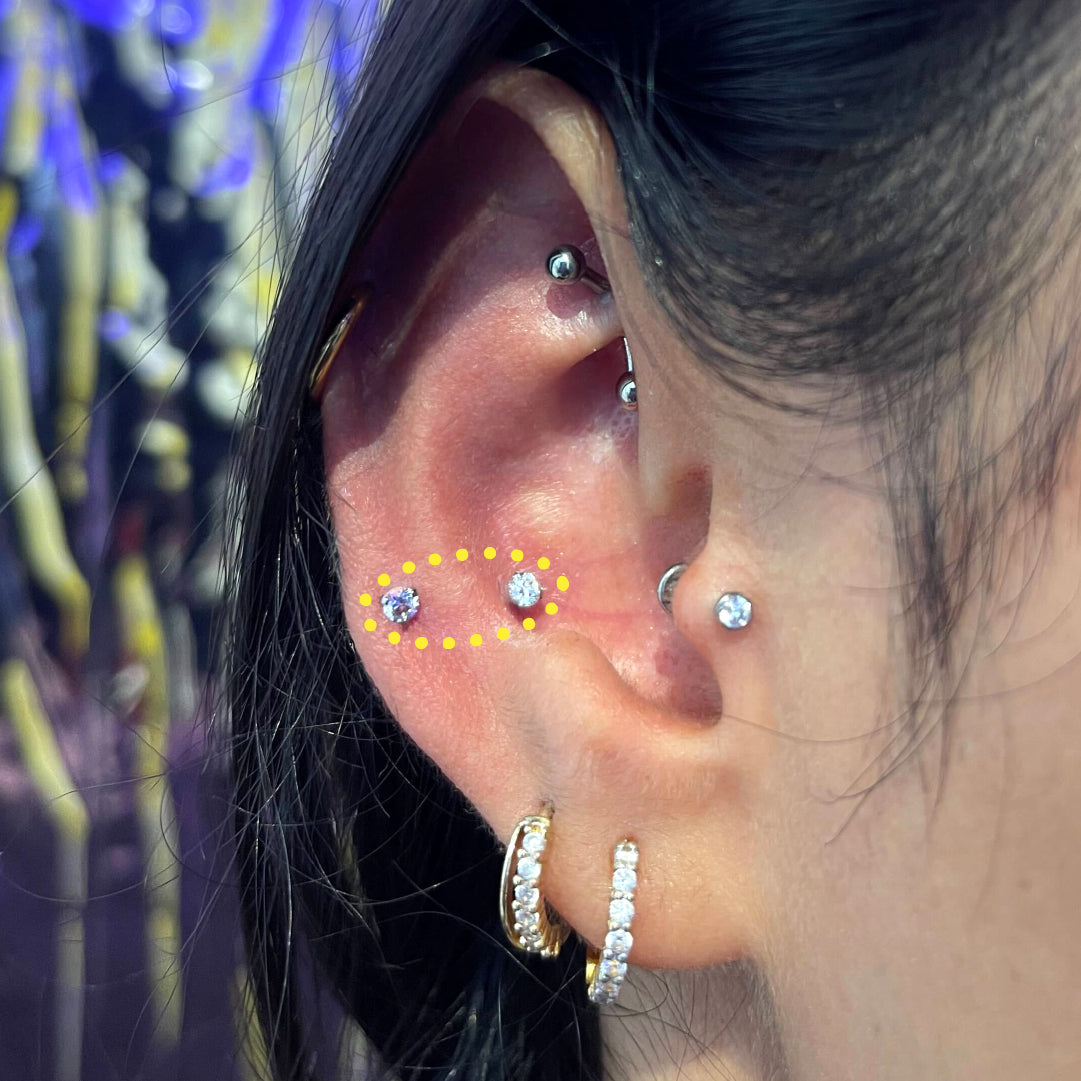
Most professionals do not use numbing cream, as it alters tissue texture. A hollow, sterilized needle creates the channel. For smiley piercings, a small clamp may hold the frenulum steady, ensuring the needle passes through quickly and accurately.
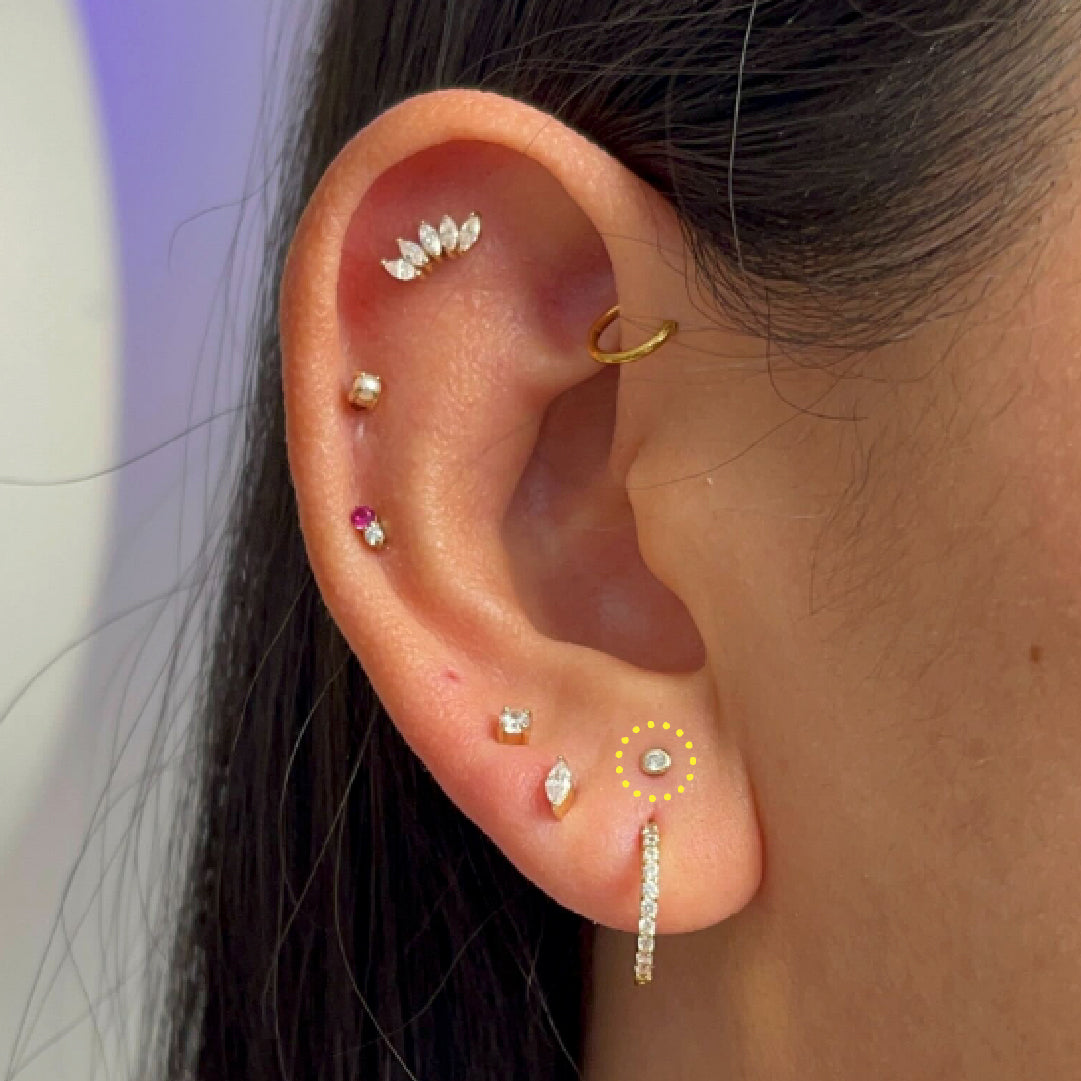
As the needle creates the hole, jewelry is attached to the back and pulled through. This ensures the jewelry enters the fresh channel without touching unsterile surfaces. Daith piercings typically receive a curved barbell or captive bead ring. Smiley piercings receive a small curved barbell or circular barbell.
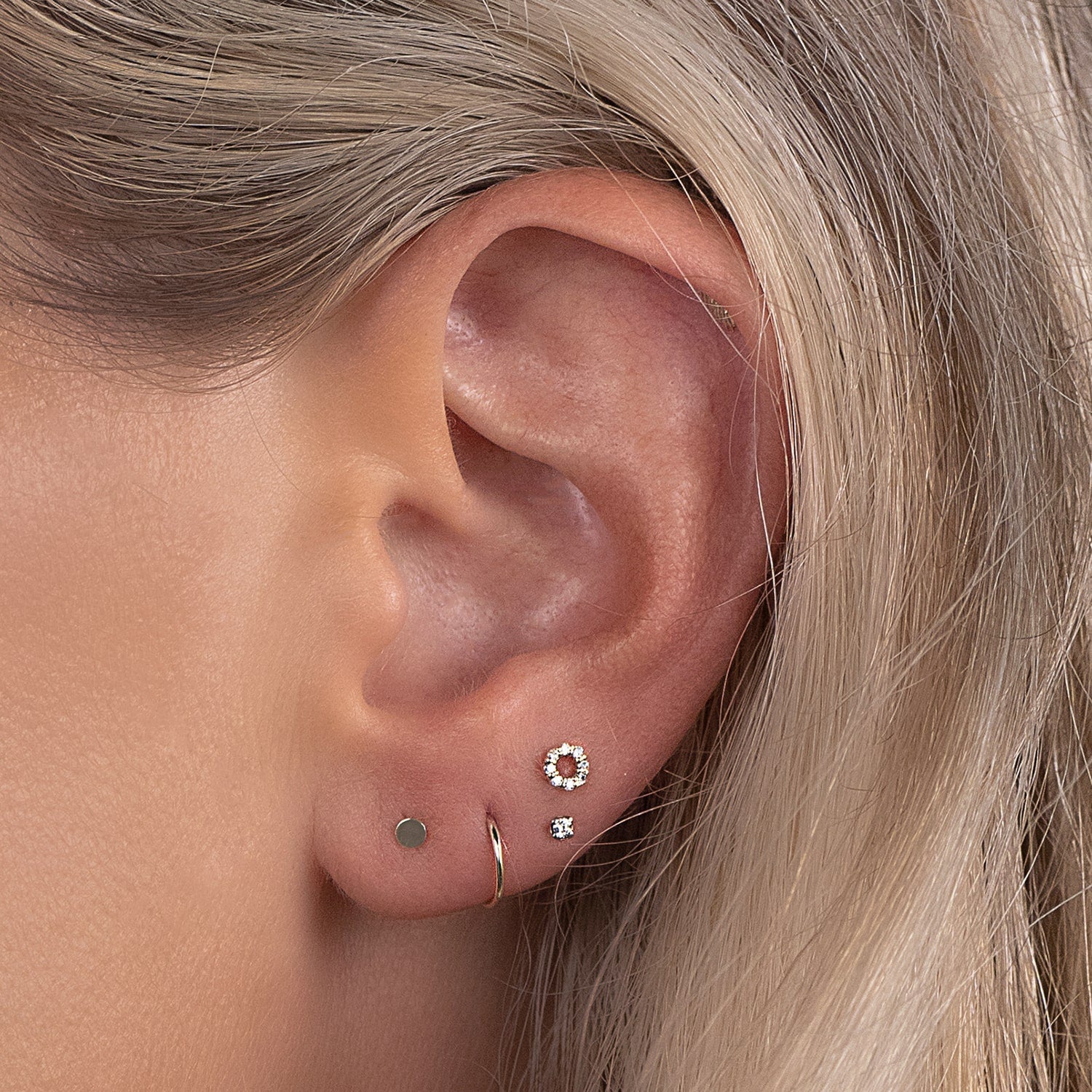
The piercer inspects placement for symmetry and comfort. They provide detailed aftercare instructions, usually involving saline rinses twice daily. You will be advised on what to avoid, such as sleeping on the ear for daith piercings or certain foods for smiley piercings.
The sensation varies. A daith piercing feels like strong pressure or a dull ache. A smiley piercing, involving thinner tissue, is often a quick pinch or snap. Both are well-tolerated and last only seconds. Afterward, most people report feeling normal, with minor tenderness setting in as the moment passes.
Healing your new piercing
The first few weeks set the foundation for long-term comfort. Healing requires consistent, gentle care to prevent infection and support tissue regeneration. Daith piercings take 3 to 9 months to heal due to limited cartilage blood flow. Smiley piercings heal faster, usually within 4 to 8 weeks, but are prone to snagging.
Step 1: Clean with sterile saline solution
Clean your piercing twice daily using sterile saline wound wash (0.9% sodium chloride). Avoid homemade salt mixes, as incorrect ratios irritate the wound. Spray the solution directly or apply with clean, non-woven gauze. Let it sit for a few minutes to soften discharge, then gently pat dry with a disposable paper product. Cloth towels harbor bacteria.
Step 2: Perform a warm saline soak
For daith piercings, warm saline soaks reduce swelling and encourage drainage. Hold a sterile compress soaked in the solution against the piercing for 5–10 minutes. This softens crusties naturally. For smiley piercings, a gentle rinse after meals removes food particles that cause irritation.
Step 3: Avoid touching or twisting the jewelry
Your hands carry bacteria. Avoid touching the piercing unless cleaning. Do not twist or turn the jewelry, as this disrupts the healing tube (fistula) and causes micro-tears. For smiley piercings, avoid resting your tongue against the jewelry or playing with it, which can lead to gum erosion or tooth damage.
Step 4: Protect the piercing from snagging
Daith piercings can catch on hair, headphones, or masks. Wear loose-fitting clothing and avoid over-ear headphones until fully healed. For smiley piercings, be cautious with straws, sharp foods, and dental work. Inform your dentist about your piercing to take precautions during exams.
Step 5: Monitor for signs of infection
Some redness, swelling, and clear or whitish discharge (lymph) is normal. However, thick yellow or green pus, extreme heat, spreading redness, or fever indicate infection. Do not remove the jewelry, as this can trap the infection. Contact your piercer or a healthcare provider immediately.
Daily aftercare checklist
- Clean with sterile saline twice daily
- Pat dry with a clean paper towel
- Avoid touching or twisting the jewelry
- Rinse mouth after eating (for smiley piercings)
- Check for signs of infection daily
When to see a professional
If your piercing remains painful after two weeks, or if jewelry embeds into the skin, seek help. Cartilage infections can become serious quickly. For smiley piercings, if jewelry becomes too tight due to swelling, a piercer can swap it for a longer post to prevent dental damage.
Common piercing mistakes
Daily habits determine healing success. Small errors in aftercare or jewelry selection can cause painful complications.
Choosing the wrong jewelry material
Cheap metals often contain nickel, triggering allergic reactions. For both daith and smiley piercings, stick to implant-grade titanium, niobium, or 14k+ solid gold. These materials are biocompatible and minimize rejection risk.
Over-cleaning or using harsh products
Aggressive scrubbing or using alcohol, hydrogen peroxide, and antibiotic ointments strips new skin cells. This irritates the fistula and delays closure. Use sterile saline solution twice a day. Gently rinse with clean water after showering and pat dry with a disposable paper towel.
Ignoring jewelry size and style
Jewelry that is too tight can embed into the skin; pieces that are too long may snag. For a smiley piercing, a curved barbell accommodates swelling. A daith piercing typically uses a circular barbell or captive bead ring. If jewelry feels tight or catches on things, contact your piercer for a size adjustment.
Piercing cost and jewelry options
Professional studios typically charge between $40 and $80 for the initial piercing, including a basic starter piece. This fee covers the sterile setup, professional time, and initial implant-grade material.
Implant-grade titanium is the gold standard for new piercings because it is hypoallergenic and lightweight. While gold or nickel-free surgical steel options exist, they often cost more and may not be suitable for fresh piercings due to potential reactions.
Once healed, you can upgrade your jewelry. Many people switch to decorative pieces like captive bead rings or curved barbells. Always consult your piercer before changing jewelry to ensure the gauge and length are appropriate.
No comments yet. Be the first to share your thoughts!