

The connection between migraines and the daith
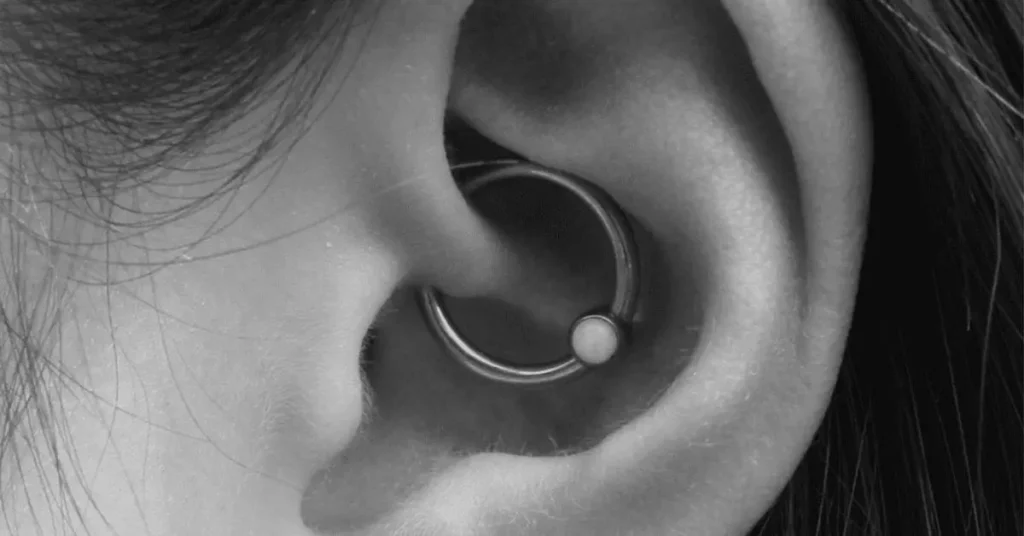
A daith piercing goes through the innermost cartilage fold of your ear. While thousands of people online swear it cured their migraines, the evidence is almost entirely anecdotal. I've seen plenty of success stories, but you have to look at them with some skepticism.
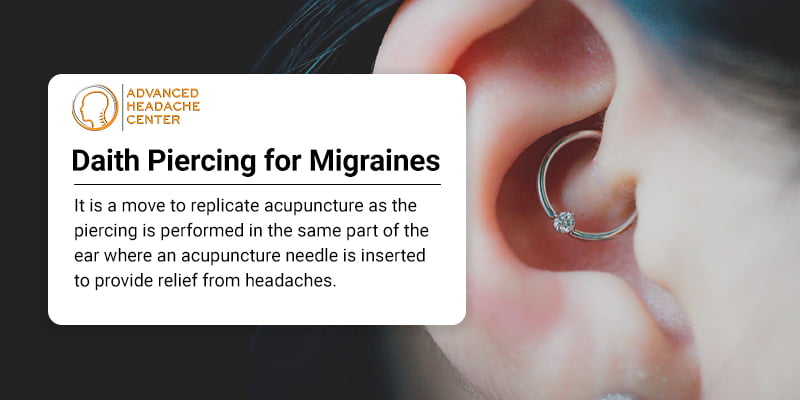
The roots of this belief trace back to acupressure, a traditional Chinese medicine technique. The daith piercing is thought to apply constant pressure to a specific point believed to alleviate headaches. This concept gained momentum with the rise of the modern piercing movement, as people began exploring body modification for potential health benefits alongside aesthetic reasons.
Doctors don't recognize this as a medical treatment. Most neurologists won't suggest it because the scientific evidence is thin. I'm going to look at what the data actually shows versus what people hope is true.
This article will explore the history of this claim, the underlying theories, the available research, and the real-life experiences of people who have tried it. We’ll break down the costs, the healing process, and help you determine if a daith piercing might be something to consider, always keeping in mind the importance of consulting with a doctor.
Acupressure and the gallbladder meridian
The belief that daith piercings can alleviate migraines stems directly from traditional Chinese medicine (TCM). TCM views the body as interconnected by pathways called meridians, through which qi (pronounced “chee”) – often translated as vital energy – flows. Blockages in these meridians are believed to cause illness, including headaches and migraines.
The location of the daith piercing corresponds to a point on the gallbladder meridian. In TCM, stimulating this point is thought to release tension, improve energy flow, and alleviate pain. Acupressure, a technique involving applying manual pressure to these points, has been used for centuries to treat a wide range of conditions, including headaches. The idea behind the daith piercing is to provide constant, gentle stimulation to this point.
It’s important to remember that TCM operates on a fundamentally different framework than Western medicine. It doesn’t focus on isolated symptoms but on restoring balance to the entire system. The concept of qi and meridians isn’t something easily measured or understood through a Western scientific lens. This doesn’t invalidate TCM, but it does mean that applying Western research standards to evaluate its effectiveness can be challenging.
The gallbladder meridian is also linked to emotional stress and tension, which are known migraine triggers. Therefore, stimulating this point may, in theory, help to manage stress-related migraines. However, this is based on a specific understanding of the body and its energy systems that differs from conventional medical thought.
What the 2026 data shows
We don't have much hard data. As of 2026, nobody has run a large-scale, randomized trial on this. Almost everything we know comes from people reporting their own results, which is notoriously unreliable in medical research.
MigrainePal, a migraine tracking and research platform, collected data from over 1,100 respondents regarding daith piercings and migraine relief. Their 2023 report found that approximately 30% of respondents reported significant improvement in their migraine frequency and intensity after getting a daith piercing, while roughly 60% reported no change. The remaining 10% reported a worsening of their migraines (MigrainePal, 2023). It's important to note this is observational data and doesn’t prove causation.
The lack of controlled trials presents a significant challenge. It’s difficult to rule out the placebo effect – the phenomenon where people experience improvement simply because they believe a treatment will work – or other confounding factors. For example, people who get daith piercings may also be more likely to adopt other healthy habits, such as stress management techniques, which could contribute to migraine relief.
Researching piercing-based treatments is inherently difficult. It’s hard to create a true “blinded” study, where neither the participant nor the researcher knows who is receiving the “treatment” (the piercing) versus a control. Ethical considerations also come into play; deliberately piercing someone with the sole intention of observing the effects raises concerns. The PMC articles available don't directly address daith piercings, but highlight the difficulties in researching alternative therapies and the need for rigorous methodologies.
Despite the limitations, the MigrainePal data suggests a potential signal worth further investigation. However, it’s crucial to interpret these findings cautiously and recognize that the daith piercing is not a proven migraine cure. More research is definitely needed, but funding for studies on piercing-based therapies remains scarce.
- The placebo effect, where you feel better simply because you expect the treatment to work.
- Confounding factors, such as lifestyle changes or new diets that happen at the same time as the piercing.
- Observational Data: Information gathered from self-reports, which doesn't prove cause and effect.
Real People, Real Results: Stories from the Community
While scientific evidence is lacking, countless individuals share their positive experiences with daith piercings for migraine relief. Sarah M., a 35-year-old graphic designer, reported a 75% reduction in her migraine frequency after getting her daith pierced. She’d suffered from chronic migraines for over a decade and had tried numerous medications with limited success. However, she acknowledges that her experience is anecdotal.
Conversely, David L., a 42-year-old teacher, reported no noticeable change in his migraines after getting a daith piercing. He’d hoped for significant relief but found that his migraine frequency and intensity remained the same. He wasn’t discouraged, though, stating that he still liked the aesthetic of the piercing.
Maria R., a 28-year-old marketing professional, experienced a temporary worsening of her migraines after getting her daith pierced, likely due to the initial trauma of the piercing itself. It took several months for her migraines to stabilize, and she eventually noticed a slight reduction in intensity, but not frequency. She emphasizes the importance of managing expectations and being patient during the healing process.
It’s vital to remember that these are just a few examples, and experiences vary widely. Some people report immediate relief, while others see no change or even a temporary worsening of their symptoms. The effectiveness of a daith piercing for migraine relief appears to be highly individual. These stories should not be taken as medical advice, but rather as illustrations of the diverse range of outcomes.
The piercing process
If you're considering a daith piercing, finding a reputable and experienced piercer is paramount. Look for a studio that prioritizes hygiene, uses sterile equipment, and has a portfolio showcasing their work. Don’t be afraid to ask questions about their experience with daith piercings specifically. A professional piercer will thoroughly explain the procedure, potential risks, and aftercare instructions.
Jewelry options typically include captive bead rings, circular barbells, or seamless rings made from materials like surgical steel, titanium, or gold. Titanium is often recommended for initial piercings due to its biocompatibility and lower risk of allergic reaction. The gauge (thickness) of the jewelry usually ranges from 16 to 14 gauge. The piercer will discuss the best options for your anatomy and preferences.
The piercing process involves clamping the inner cartilage of your ear and using a hollow needle to create the piercing. It’s generally considered a more painful piercing due to the thicker cartilage and proximity to nerve endings. The piercer will likely mark the spot beforehand to ensure accurate placement. The entire process usually takes just a few minutes.
Immediate aftercare is crucial to prevent infection and promote healing. This includes cleaning the piercing with a sterile saline solution two to three times a day and avoiding touching or twisting the jewelry. It’s also important to protect your ear from trauma and avoid sleeping on the pierced side. Potential risks include infection, rejection (where the body pushes the jewelry out), and nerve damage, although these are rare with proper aftercare and a skilled piercer.
Healing & Aftercare: A Comprehensive Timeline
Daith piercings are notoriously slow to heal, often taking 6-12 months, or even longer, to fully heal. The initial healing phase (0-6 weeks) typically involves some swelling, redness, and discomfort. Cleaning the piercing with a sterile saline solution twice daily is essential during this period. Avoid harsh soaps, alcohol-based cleaners, and touching the piercing with dirty hands.
During the intermediate healing phase (6 weeks - 6 months), the swelling should subside, but the piercing may still be sensitive. Continue cleaning with saline solution, and be careful not to snag the jewelry on clothing or hair. You might experience occasional bumps or irritation, which are usually a sign of minor irritation rather than infection. Don't remove the jewelry during this phase, as it can cause the hole to close.
The final healing phase (6-12+ months) involves continued monitoring for any signs of infection or irritation. Even after the piercing appears healed, it's important to maintain good hygiene and avoid putting excessive pressure on the ear. If you suspect an infection – characterized by excessive redness, swelling, pus, or fever – consult a doctor immediately.
Adjusting jewelry too early can also hinder healing. It’s generally recommended to wait at least 6 months before changing the initial jewelry. If you do change it, ensure the new jewelry is made from a biocompatible material and is the appropriate gauge. Patience and consistent aftercare are key to a successful daith piercing healing process.
Cost Considerations: Piercing & Ongoing Care
The cost of a daith piercing can vary depending on your location, the piercer's experience, and the jewelry you choose. Generally, you can expect to pay between $80 and $200 for the piercing itself. The price typically includes the piercer's fee and the initial jewelry.
The cost of jewelry can range from $30 for a basic surgical steel captive bead ring to $100 or more for a higher-quality titanium or gold piece. You may also need to purchase aftercare products, such as sterile saline solution, which typically costs around $10-20 per bottle.
Potential complications, such as infection, can add to the cost. A doctor's visit for an infected piercing could cost $100-200, and antibiotics may also be necessary. If the piercing rejects, you may need to pay for a second piercing attempt. It’s wise to factor in these potential costs when budgeting for a daith piercing.

No comments yet. Be the first to share your thoughts!