

The daith piercing trend
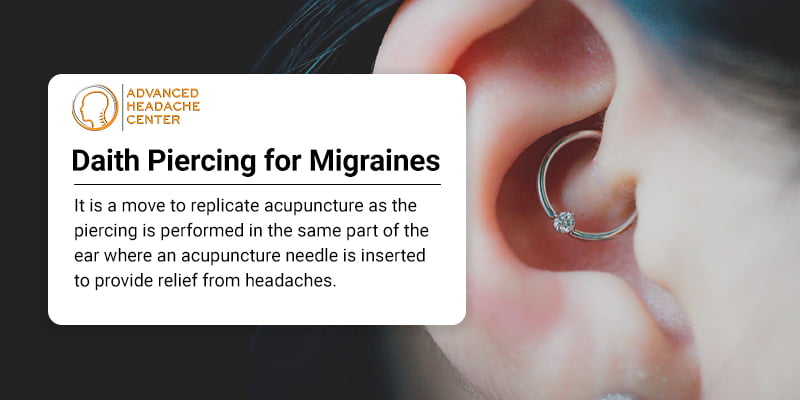
The daith piercing – a piercing through the innermost cartilage fold of the ear – has seen a massive surge in popularity recently. While it’s been around for a while, the current wave of interest is inextricably linked to claims that it can provide migraine relief. This isn’t a slow burn trend either; TikTok and YouTube are largely responsible for propelling it into the mainstream, with videos showcasing personal experiences and purported benefits racking up views.
What started as a niche body modification choice has quickly become a potential "cure" for many seeking alternatives to traditional migraine treatments. The internet is full of anecdotal evidence: people sharing their stories of reduced migraine frequency and intensity after getting a daith piercing. This is understandable. Migraines are debilitating, and the search for effective relief can be exhausting. It's easy to see why people are drawn to a solution that feels relatively simple and accessible.
Enthusiastic testimonials on TikTok aren't scientific evidence. I'm not dismissing personal relief, but there is a massive gap between feeling better and a medically proven treatment. Here is the actual science behind the connection, stripped of the social media noise.
The appeal is strong, though. A piercing is a relatively low-risk intervention, and for many, far more appealing than starting a new medication regimen with potential side effects. This desire for control over one’s own body and health plays a significant role in the trend. But hope, while powerful, isn't a substitute for careful evaluation.
Migraines and your nerves
Migraines are far more complex than just bad headaches. They're a neurological condition, meaning they involve dysfunction within the nervous system. It’s not simply your head hurting; it’s your brain experiencing a cascade of events that result in pain, and often, a host of other symptoms like nausea, sensitivity to light and sound, and visual disturbances.
Current understanding points to several key mechanisms involved in migraines. The trigeminal nerve, a major nerve responsible for sensation in the face, plays a central role. Activation of this nerve is thought to trigger the release of neuropeptides, leading to inflammation and pain. Another factor is cortical spreading depression, a wave of electrical activity that spreads across the cortex—the outer layer of the brain—and can contribute to migraine aura and pain.
Neurotransmitters, the chemical messengers in the brain, are also heavily implicated. Fluctuations in serotonin levels, for example, are known to be associated with migraine onset. This is why some migraine medications target serotonin receptors. It's a complex interplay of factors, and research is continually refining our understanding.
Migraines are individual. A trigger for one person might be harmless to another, and symptoms vary wildly. This makes diagnosis a mess. We don't have a single cure because we don't have a single cause.
The vagus nerve theory
The theory linking daith piercings to migraine relief centers around the vagus nerve. This is one of the longest and most complex nerves in the body, extending from the brainstem all the way down to the abdomen. It’s often called the "wandering nerve" because of its extensive reach and the sheer number of organs it influences.
The vagus nerve is a major component of the parasympathetic nervous system – often referred to as the "rest and digest" system. It plays a crucial role in regulating heart rate, digestion, immune function, and even mood. It's involved in a lot. And importantly, it has connections to the brain regions involved in migraine processing.
The idea is that stimulating the daith piercing point – which is located near a branch of the vagus nerve – might activate the nerve. This activation could potentially modulate pain signals, reduce inflammation, and restore balance to the nervous system. Think of it as a sort of "reset" button for the vagus nerve, calming down overactivity associated with migraines.
This is still just a guess. The vagus nerve influences pain, but we have no direct evidence that a hole in your ear cartilage consistently stops migraines. It's a plausible idea, but it isn't proven. The nerve responds to many things; a piercing is just one aggressive way to poke at it.
The concept stems from acupuncture principles, where specific points on the body are stimulated to influence energy flow and promote healing. The daith piercing point is considered analogous to certain acupuncture points used for headache relief, although the mechanisms are understood differently.
- The vagus nerve extends from the brainstem to the abdomen.
- It regulates heart rate, digestion, and immune function.
- Piercing the daith might hit a vagus nerve branch.
- Activation could modulate pain signals and reduce inflammation.
What the data actually shows
Unfortunately, the scientific evidence supporting the daith piercing for migraine relief is currently very limited. A 2023 systematic video analysis published by PMC (PubMed Central) examined YouTube videos promoting daith piercings as a migraine treatment. Researchers assessed the content for scientific accuracy, evidence-based claims, and overall quality of information.
The study, titled “Daith Piercing, a Social Media Hype on Youtube for the Treatment of Migraine? A Systematic Video Analysis”, found that the vast majority of videos relied heavily on anecdotal evidence and personal testimonials. Very few videos presented any actual scientific data or referenced peer-reviewed research. The overall quality of information was deemed low, with a significant amount of misinformation and unsubstantiated claims.
Specifically, the researchers noted a tendency to overstate the effectiveness of daith piercings and to downplay potential risks. Many videos presented the piercing as a "cure" for migraines, rather than a potential, unproven intervention. They also found a lack of transparency regarding potential conflicts of interest – for example, videos created by piercers promoting their services.
Crucially, there are no large-scale, randomized, controlled clinical trials specifically designed to investigate the effectiveness of daith piercings for migraines. This is the gold standard of medical research, and its absence is a significant limitation. Small pilot studies have been proposed, but haven't yet yielded definitive results. We simply don’t have the data to draw firm conclusions.
The lack of research isn’t necessarily surprising. Studying a piercing intervention is complex. It’s difficult to create a true "blinded’ study, where participants don’t know whether they’ve received the treatment, and ethical considerations come into play. However, the absence of evidence doesn’t equate to evidence of absence. It just means we don"t know yet.
- PMC study analyzed YouTube videos about daith piercings and migraines.
- Most videos relied on anecdotal evidence.
- Few videos presented scientific data.
- No large-scale clinical trials have been conducted.
- Study found a tendency to overstate effectiveness and downplay risks.
Social Media vs. Scientific Rigor
The contrast between the narratives circulating on social media and the standards of scientific evidence is stark. Platforms like TikTok and Facebook are filled with personal stories of migraine relief after getting a daith piercing. These stories are powerful and relatable, and it's understandable why people are drawn to them. But they're not proof.
Social media thrives on personal experience. It’s a space for sharing stories and connecting with others who have similar experiences. However, it’s not a substitute for rigorous scientific investigation. Anecdotal evidence is prone to bias and doesn’t establish causation. Just because two things happen in sequence doesn’t mean one caused the other.
Confirmation bias plays a significant role. People who believe the daith piercing works are more likely to seek out and share stories that confirm their belief, while dismissing or downplaying evidence to the contrary. This creates an echo chamber where misinformation can flourish. It's a very human tendency.
Scientific rigor, on the other hand, demands objectivity, control, and reproducibility. Studies must be designed to minimize bias, and results must be statistically significant to be considered valid. Peer review – where other experts in the field scrutinize the research – is a crucial part of the process. It's a slow, meticulous process, but it's essential for ensuring the reliability of findings.
’This worked for me’ is a valid experience, but it doesn’t mean it will work for everyone, or that it’s a medically proven treatment. It’s essential to separate personal anecdotes from scientific evidence when making decisions about your health.
Piercing Considerations and Risks
Regardless of the migraine claims, it's essential to understand the practical aspects of getting a daith piercing. It’s not a pain-free procedure. Pain levels vary depending on individual tolerance and the piercer’s skill, but most people describe it as a sharp, brief pain. It’s definitely more painful than a lobe piercing.
The healing time for a daith piercing is also considerably longer than for a standard ear piercing. It can take anywhere from 6 to 12 months, or even longer, for the piercing to fully heal. During this time, diligent aftercare is crucial to prevent infection and promote healing. You'll need to clean the piercing twice a day with a sterile saline solution.
Potential complications include infection, rejection (where the body pushes the jewelry out), and migration (where the piercing shifts from its original position). These complications can be painful and may require medical attention. Choosing a reputable and experienced piercer is the best way to minimize these risks. Lynn Loheide’s website offers excellent resources on finding safe and qualified piercers.
The cost of a daith piercing can vary depending on location and the piercer’s experience, but you can generally expect to pay between $30 and $90 for the piercing itself. However, this doesn’t include the cost of aftercare products, such as saline solution, or potential follow-up appointments if complications arise. Budget accordingly.
Remember, proper aftercare is non-negotiable. This includes avoiding touching the piercing with dirty hands, not sleeping on the pierced ear, and avoiding harsh chemicals or perfumes near the piercing site.
Making an Informed Decision
Currently, the daith piercing for migraine relief remains largely based on theory and anecdotal evidence. While the idea of stimulating the vagus nerve is intriguing, there’s a significant lack of scientific evidence to support its effectiveness. The social media hype surrounding this treatment far outpaces the available research.
If you’re considering a daith piercing for migraines, it’s crucial to have realistic expectations. Don’t view it as a guaranteed cure. Understand that it may not work for you, and that there are potential risks involved. The PMC study clearly demonstrates a gap between online claims and scientific rigor.
Before making any decisions, consult with a healthcare professional. Discuss your migraine history, current treatments, and potential risks and benefits of a daith piercing. They can help you weigh the evidence and make an informed choice that’s right for your individual needs.
Prioritize evidence-based treatments for migraine management. Medications, lifestyle changes, and complementary therapies with some scientific backing should be considered first. A daith piercing can be explored as a potential adjunct, but it shouldn’t replace proven methods. Empower yourself with knowledge and make a decision that prioritizes your health and well-being.

No comments yet. Be the first to share your thoughts!