
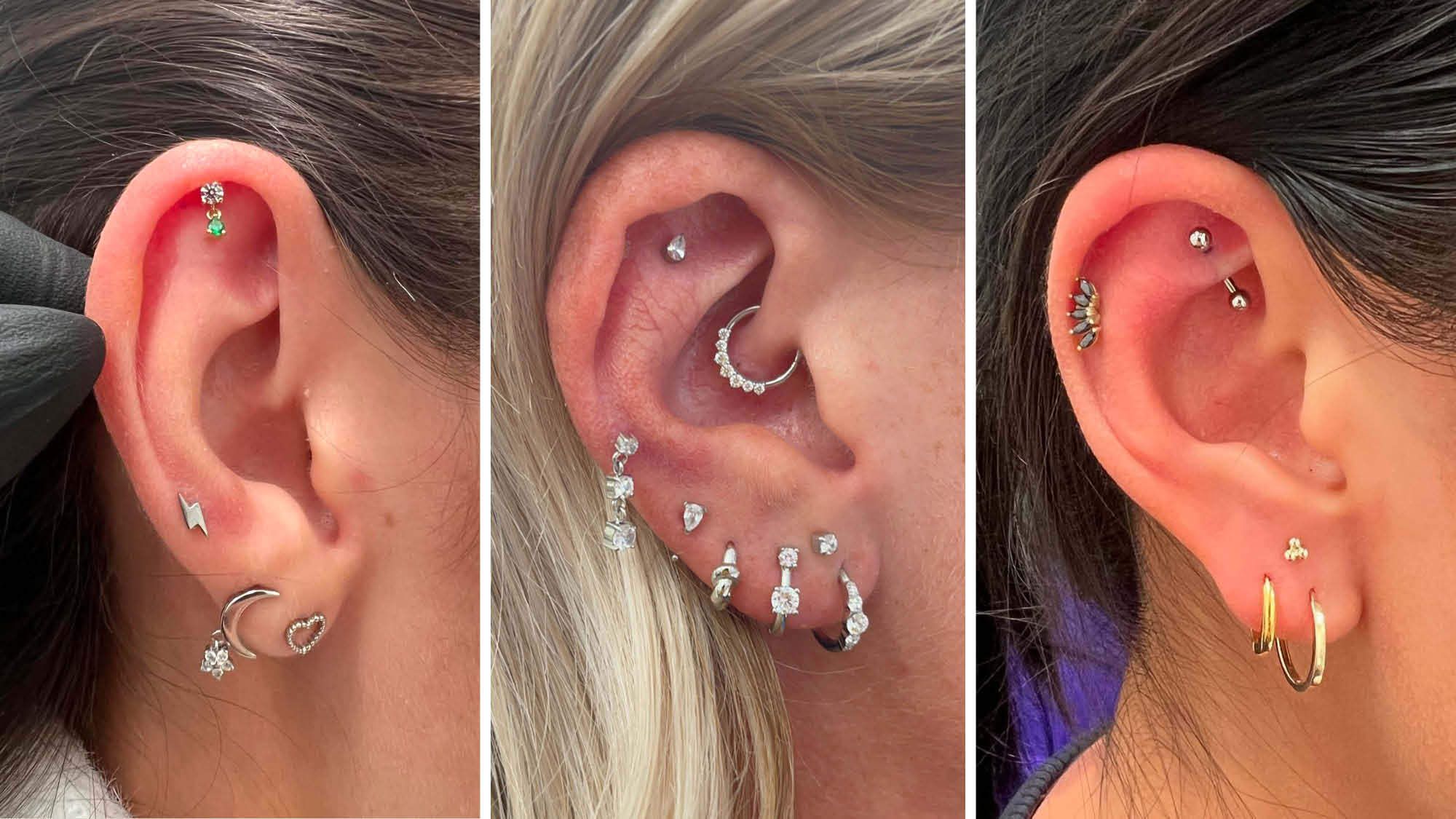

What makes Piercing Pals jewelry unique
Piercing Pals jewelry redefines small-gauge accessories by turning standard piercings into wearable art. Instead of relying on traditional geometric shapes, this aesthetic focuses on tiny, collectible characters that add personality to septum, helix, and daith placements. The trend transforms everyday jewelry into a narrative, allowing wearers to curate a set of miniature figures that reflect their individual style.
The appeal lies in the juxtaposition of cute, whimsical designs against the edgier backdrop of body modification. Whether it’s a tiny mushroom on a helix clicker or a miniature animal on a septum retainer, these pieces are designed to be noticed without overwhelming the piercing site. This approach has gained significant traction, with character-driven jewelry becoming a dominant trend for 2025.
Safety remains a priority even when the designs are playful. Because these pieces are often detailed and small, they are typically crafted from implant-grade materials to prevent irritation, especially in healing piercings like the daith or helix. The collectible nature of the jewelry also encourages rotation, allowing wearers to change their look frequently while keeping the actual jewelry in contact with the skin minimal and safe.
Best Piercing Pals for septum and smiley rings
Piercing Pals has carved out a niche in the body jewelry market by prioritizing comfort without sacrificing style, particularly for popular facial piercings. Their septum and smiley collections are designed to sit securely while remaining gentle on sensitive tissue, making them ideal for both healing and long-term wear. The brand focuses on high-quality materials and thoughtful engineering, ensuring that even small, subtle pieces hold up to daily life.
Septum Rings: Hinged and Captive Bead Options
For septum piercings, Piercing Pals offers two primary styles that cater to different aesthetic preferences and security needs. The hinged segment ring (HSR) is a favorite for its ease of use; it features a seamless hinge that allows the jewelry to flip up and hide inside the nostril, a practical feature for professional settings or active lifestyles. These rings are typically crafted from implant-grade titanium or gold-filled materials, minimizing the risk of irritation.
Alternatively, their captive bead rings provide a classic, continuous look with a secure clasp mechanism. The bead snaps firmly into place, reducing the chance of accidental loss compared to older spring-ring designs. Both styles are available in various gauges and diameters, allowing you to find the perfect fit for your anatomy. The smooth finish on these pieces ensures they glide through the piercing channel easily, which is especially important for newly healed septums.
Smiley Rings: Internal Threads and Tiny Hoops
Smiley piercings, located in the frenulum of the upper lip, require jewelry that is lightweight and low-profile to avoid interference with speech and eating. Piercing Pals addresses this with internal threaded smiley rings, where the threading is on the bar rather than the jewelry ends. This design prevents the metal from catching on teeth or gums, a common issue with externally threaded pieces. The internal threading also keeps the jewelry secure, as the screw mechanism is less likely to loosen over time.
These tiny hoops are crafted from thin, flexible materials that conform to the natural curve of the lip. The brand’s smiley rings often come in delicate finishes like brushed titanium or polished steel, offering a subtle sparkle that catches the light when you speak. Because the frenulum is a thin and sensitive area, the smooth, rounded edges of Piercing Pals’ designs are crucial for preventing discomfort or migration. Choosing a piece with a secure closure and a comfortable fit is essential for maintaining a healthy smiley piercing.


As an Amazon Associate, we may earn from qualifying purchases.
Helix and daith jewelry picks
Helix and daith piercings sit in the ear’s curved cartilage and inner folds, making jewelry choice critical for comfort and healing. The wrong closure can press against sensitive tissue, while the wrong gauge can cause migration. Piercing Pals designs pieces that prioritize secure fit and easy insertion for these harder-to-reach spots.
For helix piercings, a snug labret stud or curved barbell is often the best starting point. These shapes follow the ear’s natural contour without snagging on hair or clothing. Look for 14g or 16g gauge options with a flat back to minimize pressure on the healing channel.
Daith piercings require jewelry that sits comfortably in the ear’s innermost fold. A circular barbell or captive bead ring works well here, as it distributes weight evenly. The closure mechanism must be secure but easy to open for cleaning. Piercing Pals offers titanium options that reduce the risk of irritation during the long healing process.
When shopping for cartilage jewelry, prioritize implant-grade titanium or niobium. These materials are hypoallergenic and less likely to cause reactions in sensitive areas. Avoid nickel-containing alloys, which can lead to inflammation and prolonged healing times.
Piercing Pals curates a selection of helix and daith-specific pieces that balance style with function. Their designs often feature low-profile settings that stay hidden or subtly visible, depending on your preference. This approach ensures that your jewelry supports your piercing’s health while complementing your personal aesthetic.


As an Amazon Associate, we may earn from qualifying purchases.
Piercing cost and material considerations
The upfront cost of a septum, helix, or daith piercing is rarely just the jewelry; it’s the combination of the piercer’s fee and the material quality. While basic stainless steel implants are affordable, they carry a higher risk of irritation for sensitive skin. Titanium and solid gold offer superior biocompatibility, ensuring your piercing heals smoothly without the itchiness or redness that often accompanies lower-grade metals.
Most studios in major cities charge between $30 and $80 for the procedure itself, depending on complexity. Cartilage piercings like helix or daith often cost more than lobe piercings due to the precision required. When you add jewelry to this base fee, the total investment shifts significantly. Choosing a higher-quality material upfront can prevent the hidden costs of aftercare products, removal fees, and potential medical visits for allergic reactions.
Material comparison: Steel vs. Titanium vs. Gold
| Material | Best For | Healing Safety | Durability |
|---|---|---|---|
| Surgical Steel | Initial lobes, budget setups | Moderate (risk of nickel allergy) | High |
| Implant Titanium | Septum, helix, daith | Excellent (hypoallergenic) | High |
| Solid Gold (14k+) | Long-term wear, sensitive skin | Excellent (inert) | Very High |
Why material matters for healing
Your jewelry acts as a foreign object in your body. If it contains nickel or low-grade alloys, your immune system may reject it, leading to prolonged inflammation. This is especially critical for daith and helix piercings, which heal slower than lobes. Implant-grade titanium is the gold standard for new piercings because it is lightweight, non-reactive, and resistant to corrosion. Solid gold is ideal for long-term wear but should be avoided during the initial healing phase if it contains hardeners that might irritate the fresh wound.
Cost breakdown: What to expect
When budgeting for your piercing, consider the total package. A typical helix piercing might cost $50 for the procedure plus $20-$50 for the jewelry. A daith piercing, being more complex, could run $60-$100 for the procedure and $30-$60 for jewelry. Septum piercings are often on the lower end, with procedures around $40 and jewelry starting at $15. Always ask your piercer if the jewelry price is included in the piercing fee, as some studios charge separately.


As an Amazon Associate, we may earn from qualifying purchases.
Essential piercing care and healing tips
Proper care for your Piercing Pals jewelry prevents infection and ensures your septum, helix, or daith heals smoothly. Jewelry acts as a foreign object in your body, so keeping it clean is the most important step in the healing process. Neglecting hygiene can lead to irritation bumps, prolonged healing times, or infection.
Clean with sterile saline solution
Use a sterile saline wound wash (0.9% sodium chloride) twice daily. Avoid cotton swabs, which can snag on septum clickers or helix studs, leaving fibers that cause irritation. Instead, spray the solution directly onto the jewelry or apply it with a clean, non-woven gauze pad. This gentle approach removes crusties and bacteria without disrupting the delicate healing tissue.
Avoid harsh chemicals and alcohol
Hydrogen peroxide, rubbing alcohol, and antibiotic ointments are too harsh for fresh piercings. These substances kill healthy new cells needed for healing and can dry out the skin, leading to cracking and scabbing. Stick to saline. If you are wearing a smiley or labret, ensure your mouthwash is alcohol-free to protect the internal healing channel.
Practice the "no touch" rule
Every time you touch your jewelry, you introduce bacteria from your hands. Avoid twisting or turning the jewelry, as this damages the forming fistula (the skin tunnel). When showering, let warm water run over the piercing to rinse away soap residue. Pat the area dry with a clean paper towel rather than a shared bath towel, which harbors bacteria.
Monitor for signs of infection
Some redness and mild swelling is normal during the first few weeks. However, watch for excessive heat, thick yellow or green discharge, or increasing pain. If you notice these symptoms, do not remove the jewelry, as this can trap the infection inside. Consult your piercer or a healthcare professional immediately for proper treatment.
Where to buy authentic Piercing Pals jewelry
Securing genuine Piercing Pals jewelry requires sticking to authorized channels to avoid counterfeit items that may lack the necessary biocompatibility for healing piercings. While the brand operates primarily through its own digital storefront, it maintains a curated network of licensed retailers. Purchasing from these verified sources ensures you receive implant-grade titanium or solid gold pieces that meet strict safety standards for septum, helix, daith, and smiley piercings.
For those who prefer to see the jewelry before buying, visiting a licensed professional piercing studio is the safest route. Many reputable studios stock Piercing Pals collections or can order specific pieces directly from the brand. This approach also guarantees professional installation, which is critical for minimizing the risk of rejection or infection during the healing process. Avoid third-party marketplaces with unverified sellers, as the risk of receiving substandard materials is too high for body jewelry.


As an Amazon Associate, we may earn from qualifying purchases.
Frequently asked questions about Piercing Pals jewelry
Are Piercing Pals safe for fresh piercings?
Piercing Pals are best suited for fully healed piercings. Their small, decorative nature means they lack the structural integrity needed for the migration and swelling phases of healing. For fresh septums, helix, or daith piercings, stick to implant-grade titanium or 14k gold jewelry. Once your piercings are closed and comfortable, you can swap in your favorite Piercing Pals designs without irritation.
How do I keep Piercing Pals from getting lost?
Because these pieces are tiny and collectible, they can easily slip off or get swallowed if not handled with care. Always ensure the clasp or connection point is fully seated before wearing. When cleaning, use a soft toothbrush with mild soap and water, then dry thoroughly with a lint-free cloth. Store them in a compartmentalized box or jewelry organizer to prevent tangling or loss.
Can I wear Piercing Pals in my daith or helix?
Yes, many Piercing Pals designs are specifically crafted for daith and helix placements. Look for pieces with secure backing or captive bead rings that fit snugly in the cartilage fold. Avoid loose or dangling styles for the helix, as they can catch on hair or clothing. For the daith, ensure the piece is smooth and doesn't press against the inner cartilage ridge.
What material are Piercing Pals made of?
Most Piercing Pals are made from high-quality stainless steel or brass with a durable plating. They are designed to be hypoallergenic for most people, but those with sensitive skin should check the specific product details for nickel-free options. Regular cleaning helps maintain the finish and prevents tarnishing, keeping your jewelry looking bright and new.
No comments yet. Be the first to share your thoughts!